Curious about all the different biomes you can explore in Minecraft? This guide covers every major biome as of the Minecraft 26.2 update (released June 16, 2026), including the brand-new Sulfur Caves! Whether you’re playing Java or Bedrock/Pocket Edition, you’ll find what makes each biome unique and how to recognize them in-game.
Version & Edition Compatibility
- Minecraft Version: 1.20+ (including update 26.2 – June 2026)
- Editions: Java Edition, Bedrock Edition, Pocket Edition
- No modloader or add-ons required—these are vanilla (unmodded) biomes.
What Are Biomes in Minecraft?
Biomes are regions in Minecraft defined by distinct geography (landform), plantas, multidões (game creatures), and sometimes weather. They reflect real-world locations—from snowy tundra to dense forest. Some biomes have rare resources or unique generated structures (like igloos or villages), and each one changes up your gameplay and adventure possibilities.
List of Primary Minecraft Biomes & Variants (2026)
Existem 20+ primary biomes in Minecraft, with many offshoots (variants) for extra flair, like deep ocean, windswept hills, and forest edges. Here are some of the main ones to look out for:
- Plains: Flat grasslands, sometimes with trees. Great for villages, farming, and horses.
“Plains are one of the most common biomes—even if you’ve never played Minecraft, you’ve probably seen a screenshot of plains.” — Eric Frederiksen
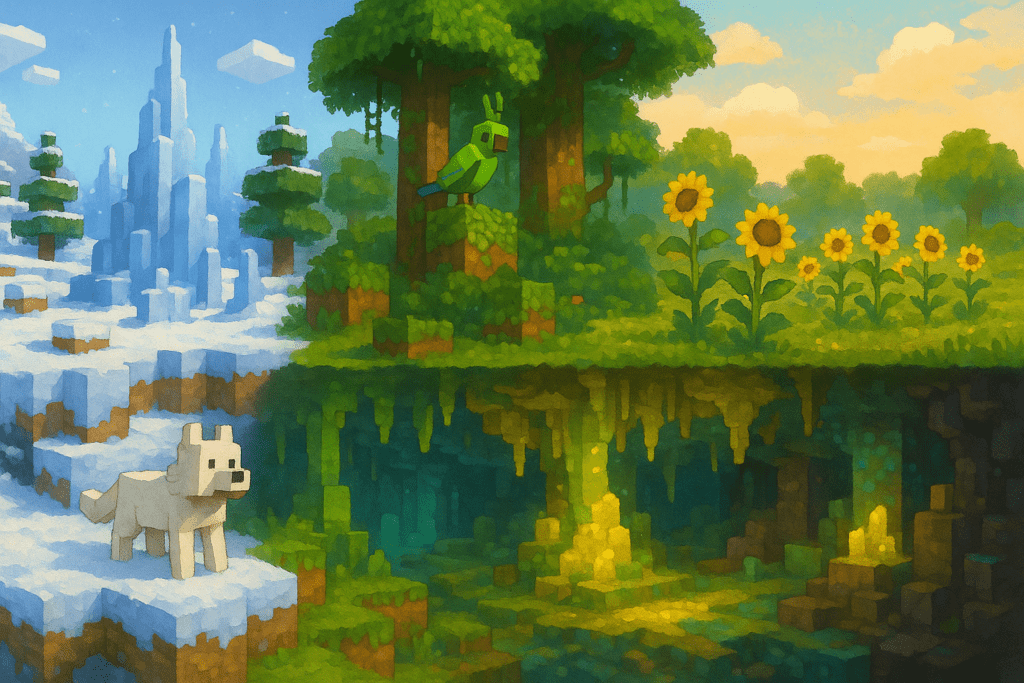
- Sunflower Plains: A variant of Plains, this is the somente place where sunflowers grow. Bright and cheerful!
- Snowy Plains: Flat and covered in snow/ice, with few trees. Rabbits and polar bears spawn here, and you might find igloos!
- Ice Spikes: Rare variant of Snowy Plains with dramatic spires of packed ice jutting from the ground—amazing for builders and explorers.
- Mushroom Fields: Mycelium islands where giant mushrooms grow. The only home of the mooshroom cow—a rare passive mob. No hostile mobs spawn on the surface, making it a safe haven.
- Savanna: Warm, dry plains with acacia and oak trees. You’ll find llamas, armadillos, and other warm-variant animals. Terrain is usually flat but can have scenic plateaus.
- Jungle: Lush, green biome featuring massively tall jungle trees (up to 31 blocks high!) and short trees built around a single block of wood. Home to parrots, ocelots, and pandas.
- Forest, Taiga, Swamp, Desert, Ocean/Ocean Variants, Badlands, Mountains (Windswept/Wooded/Gravelly Hills): Each of these biomes has unique plants, mobs, and terrain. For example, Taiga has spruce trees and wolves, Swamps have frogs and lots of water, and Badlands feature red sands and lots of mineshafts.
New! Sulfur Caves (26.2 Update, June 2026)
Introducing: The Sulfur Caves biome! “The Sulfur Cave is the newest biome, added with the 26.2 update on June 16, 2026, and is perfect if you, like me, get a little tired of the same grey surroundings while mining.” — Danielle Rose
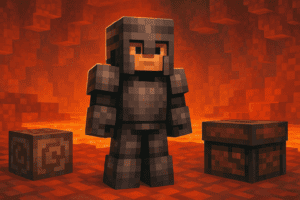
Found deep underground, Sulfur Caves break up the standard stone look with glowing red and yellow blocks. These unique environments add variety to mining sessions and may offer new resources or decorative blocks (keep an eye out as players discover more!).
- Look for bright sulfur-colored formations and pockets of red and yellow rock.
- May introduce new underground challenges or resources (check the update notes for details!).
Tips for Finding Every Biome
- Explore far and wide! Some biomes, like Mushroom Fields or Ice Spikes, are rare and may require lots of traveling.
- Use seeds (codes for world generation) known to include special or rare biomes if you just want to see them.
- Bring appropriate gear: snow gear for cold biomes, boats for oceans, and food for long journeys!
Quick Recap & What’s Next
In total, Minecraft’s world (as of the June 2026 update) is made up of over 20 major biomes, each with eye-catching variations. The headline addition for 2026 is the vividly colored Sulfur Caves, transforming underground exploration.
Want to learn more? Check out our guide on tracking down every biome, or browse our full Minecraft wiki section for deep dives on structures, mobs, and more!
Sources: GamesRadar Minecraft Biomes, Minecraft Official Biomes List, GameSpot Minecraft Biome Guides